Step into the world of Samhain and you’ll find yourself among a cast of characters unlike any other. Ancient warriors, shape-shifting spirits and creatures from the otherworld have all played a part in Ireland’s rich mythology, with their stories surviving for generations. At Púca Festival, these legends become part of the experience, appearing throughout the festival in unexpected ways.
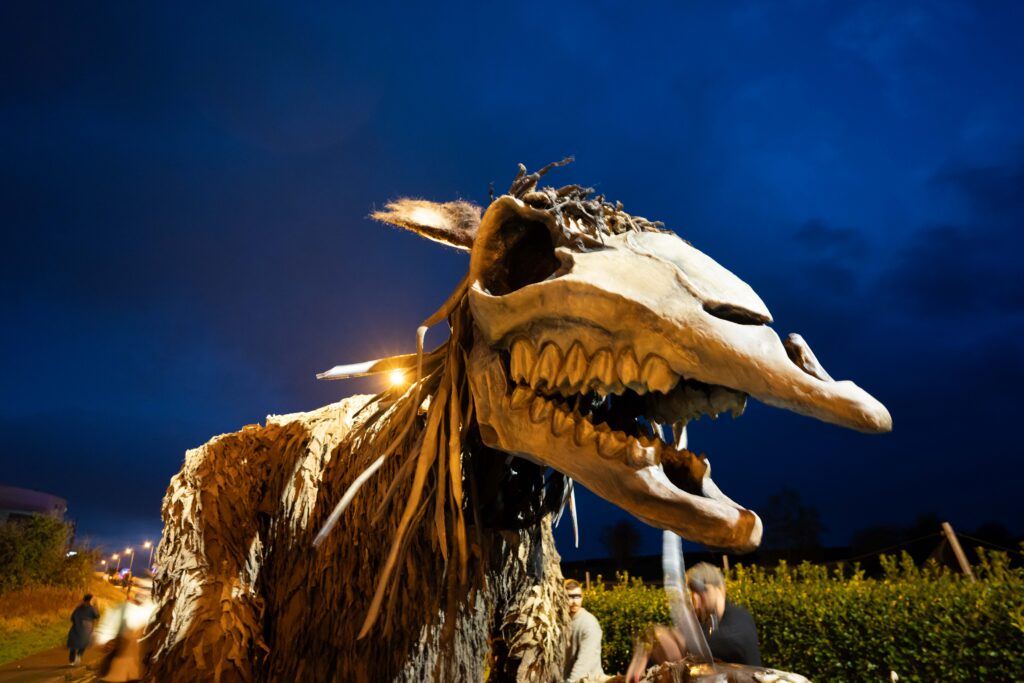
In the shadowy corners of Irish folklore dwells a creature both feared and revered: The Púca. This enigmatic spirit is said to roam the wilder parts of the countryside, slipping between mountain peaks and skimming the still waters of remote lakes. A master of disguise, the Púca is a shape-shifter whose arrival can herald either fortune or mischief.
To some, he is a helpful ally, bestowing bountiful harvests and healthy livestock. But to others, he is a harbinger of havoc. He’s been known to take the form of a wild black horse, bursting through fences, flattening gates, and trampling crops in the dead of night. Mischievous at heart, the Púca delights in unnerving humanfolk — not with harm, but with frightful fun.
Though he can appear in human form, the Púca often retains an unsettling trace of animal form: a flick of a tail or the clack of a hoof! When he shows up as a man, he is always striking: jet-black hair, a silver tongue, and a flair for storytelling. He’ll charm you with tales of how his ancestors were swindled out of wealth and land, perhaps even offer you cryptic advice — and then vanish, leaving you questioning whether he was ever real at all.
One of the most enduring images of the Púca is that of a great black horse with fiery red eyes and a wild, unkempt mane. According to legend, he lurks along quiet country lanes, waiting for inebriated travellers stumbling home from the pub. Offering them a ride, sometimes without a word, he sweeps them up before they even realise what’s happening. What follows is a wild, otherworldly gallop through fields, over ditches, and into the night. Come morning, the rider is flung off, bewildered and lost, miles from home.
In days gone by, especially in the weeks before Samhain — the ancient Celtic festival marking the end of harvest — farmers would leave a portion of their crops in the fields for the Púca. These offerings, known as “the Púca’s share,” were meant to keep him appeased. If satisfied, he’d bless the land with abundance the following year. If not… well, let’s just say the Púca has his ways of showing disappointment.
Even today, stories of the Púca live on — whispered around fires, passed from one generation to the next, and surfacing on windswept roads when the night feels just a little too still.
